
Water softeners in Leander, TX
Leander Water Softener Sizing: Treating 194 ppm City Water Before It Reaches Your Heater
White crust on the showerhead, spotted glasses and a heater that seems to hold less each year usually share one cause. The City of Leander reports 194 ppm hardness, which is very hard. This page helps you decide whether a softener is the right fix, how big it should be and what to ask before anyone installs it. If you are comparing water softener Leander options, start with the number on the city's report and size from there.
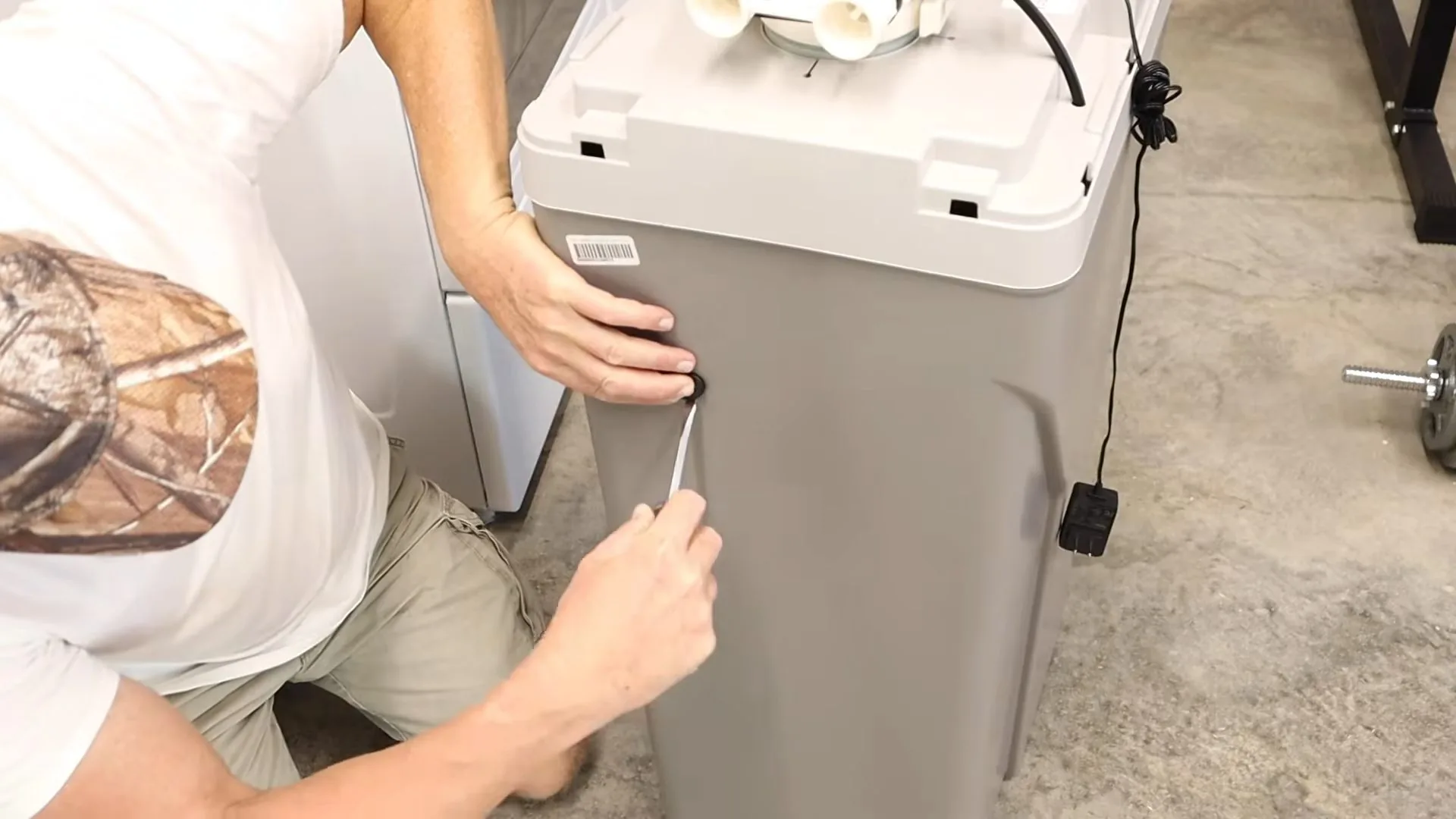
Is a softener the fix, or will descaling be enough?
White crust on a showerhead, cloudy glasses out of the dishwasher and a heater that seems to hold less hot water each year all point to the same cause. Leander's water is hard enough that minerals leave a film on almost everything it touches. The question is whether you keep scraping that film off or stop it forming.
Descaling a faucet aerator with vinegar takes about ten minutes. It does not change what the water is doing inside the walls, in the dishwasher or at the bottom of the tank. A softener works on the water itself, before it reaches any of those places.
| What you see | What is behind it | Does a softener change it? |
|---|---|---|
| White crust on faucets and shower heads | Calcium and magnesium left behind as water dries | Yes. It removes most of the minerals that form the crust |
| Spots on glasses and the dishwasher door | Mineral residue after the rinse cycle | Yes, usually. Rinse aid still helps |
| Hot water runs out sooner than it used to | Scale and sediment collecting in the water heater tank | It slows the buildup. It does not clear scale already there |
| Water tastes or smells of chlorine | Treatment chemicals, not hardness | No. A carbon filter handles taste and odor |
| Low flow at one tap only | A clogged aerator or worn cartridge | No. See repairing a worn faucet |
If only one or two fixtures bother you and you own your home for the long haul, a softener is usually the better answer than a lifetime of descaling. If you rent, or the only complaint is taste, it probably is not.
What does 194 ppm mean when you size a softener?
The City of Leander's 2024 water quality report lists hardness at 194 parts per million. That converts to about 11.3 grains per gallon, and the U.S. Geological Survey calls anything above 180 mg/L very hard. The same report gives 194 for the minimum, the maximum and the average, so the city is describing one steady figure rather than a range.
Sizing starts from that figure. A softener holds a fixed number of grains of hardness before it has to regenerate with salt. The more grains your household uses each day, the sooner it runs out.
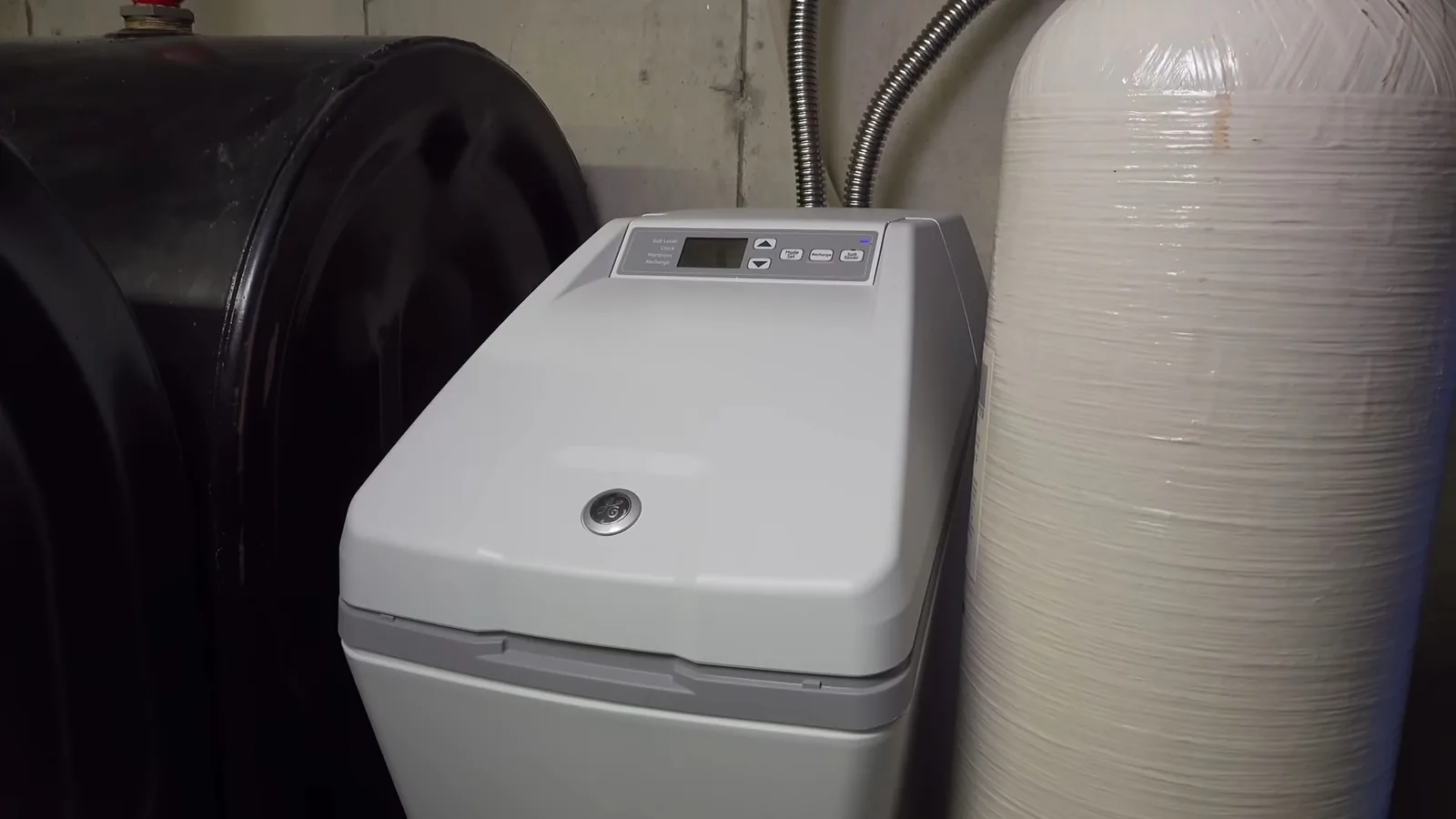
Here is the arithmetic, using a planning figure of about 75 gallons of water per person per day. These are illustrative numbers, not a quote, and your installer should test your own water.
| People in the home | Water per day | Hardness to remove per day |
|---|---|---|
| 2 | about 150 gallons | about 1,700 grains |
| 4 | about 300 gallons | about 3,400 grains |
| 6 | about 450 gallons | about 5,100 grains |
Divide a unit's rated capacity by the daily figure to estimate how many days it runs between regenerations. A unit that regenerates every day or two wastes salt and water. One that goes more than about a week can let hardness slip through at the end of the cycle. This is why a sales page that quotes a different hardness number for Leander is not a safe basis for sizing.
Ask the installer to size the system to the city's reported 194 ppm, then confirm with a test strip or meter reading at your tap. The city publishes a new report each summer, and Public Works can send it: 512-259-2640.
Salt-based softener, no-salt conditioner or a filter?
These three products are sold as if they were interchangeable. They solve different problems, so choose by the problem you actually have.
- Salt-based softener (ion exchange)It swaps calcium and magnesium for sodium or potassium, which removes the hardness minerals from the water. This is the option that actually changes scale on fixtures and in the heater. It needs salt, a drain connection and a power outlet.
- No-salt conditionerThese units change how minerals behave so they cling less, but they do not remove hardness. Results vary with the product and the water, and they are a weaker match for water as hard as Leander's.
- Whole-home carbon filtrationA filter addresses taste, odor and some treatment chemicals. It does not soften water. Many homes pair a softener with a filter, because the two jobs do not overlap.
If your goal is scale, ask for a salt-based softener quote first and compare anything else against it. If your goal is taste, start with filtration. A call is the quickest way to talk it through.
Not sure which one you need?
Describe the spots, the crust or the taste you are seeing. The person who answers can tell you which of these three fits and route you to a plumber serving your part of Leander.
Call (833) 571-0120Your softener stopped softening: repair it or replace it?
A softener that has gone quiet usually has a simple cause. Check these before you call, and tell the plumber what you found.
- Look at the salt. If the brine tank is empty, refill it. If it looks full, push a broom handle in. A hard crust under loose salt is a salt bridge, and it stops the unit from making brine.
- Check the bypass valve. After a repair or a power cut, the valve is sometimes left in bypass, which sends hard water straight to the house.
- Check the display and the clock. A power cut can reset the time, so the unit regenerates in the middle of the day or not at all.
- Test the water. A test strip from the tap tells you whether the unit is still softening a little or not at all.
If none of that fixes it, the problem is usually the control valve, the injector, a worn seal or tired resin. Resin and valves wear out over years, and a plumber can tell you which part has failed. Ask for the failed part to be named in the quote.
The repair-or-replace choice turns on age and condition. A younger unit with one failed part is a repair. An older unit with a leaking tank, worn resin and a failing valve is a replacement, because you would be paying to fix parts that will go next.
What should you ask a Leander installer before work starts?
A softener install touches your water line, a drain and an outlet, so a few questions at the start prevent most disappointments.
- What hardness figure are you sizing to?The right answer is the city's reported 194 ppm, confirmed at your tap, not a number from a brochure.
- Where will the bypass valve and the outdoor taps be?You usually do not want softened water on lawn and garden taps, and a good installer plans for that.
- How does the unit drain?It needs a proper drain connection with an air gap so wastewater cannot siphon back.
- Is the plumber licensed, and who pulls any permit?Texas requires plumbing work to be done by a licensed plumber or under one's supervision. You can look up a license on the Texas State Board of Plumbing Examiners site. The City of Leander says contractors must be registered with the city before a permit is issued, so ask whether this job needs one.
- What does the warranty cover?Get the tank, valve and labor terms in writing.
For the cost side, see our what a softener install costs. Any number you are given should come from a plumber who has seen your water line and your layout.
Should a softener go in before a new water heater?
Hard water is hard on a tank heater. Scale settles at the bottom, insulates the water from the burner or element and can shorten the life of the tank. If a heater is already failing in a house with no softener, you are choosing between two projects that affect each other.
Putting the softener in first protects the next heater from the same buildup. If the heater cannot wait, replace it and plan the softener soon after, and read the heater's warranty for any water-quality conditions. Some manufacturers set them, and you want to know before you buy. Our pages on water heater replacement and tankless units cover that side in more detail.
Whole-home filtration for taste and odor is a separate, optional step. It is worth asking about once the hardness is handled.
Sources: City of Leander 2024 Consumer Confidence Report; USGS hardness scale; City of Leander permits page. Sizing figures above are illustrative arithmetic, not a quote.
Talk through your water with a plumber
Tell us what you see at the tap. You will get a clear next step and a plumber routed to your part of Leander.
Call (833) 571-0120