
Water heater repair in Leander, TX
Leander Water Heater Repair: No Hot Water, a Wet Tank or a Pilot That Keeps Going Out
Water on the floor by the heater, or a shower that will not get warm, forces a quick decision: is this an urgent call or a repair that can wait? The answer depends on where the water is and what has stopped working. This page walks through the safe checks, the repair-or-replace choice and what to ask the plumber to write down. If you are searching for water heater repair Leander TX homeowners can act on today, begin with the safe checks below.
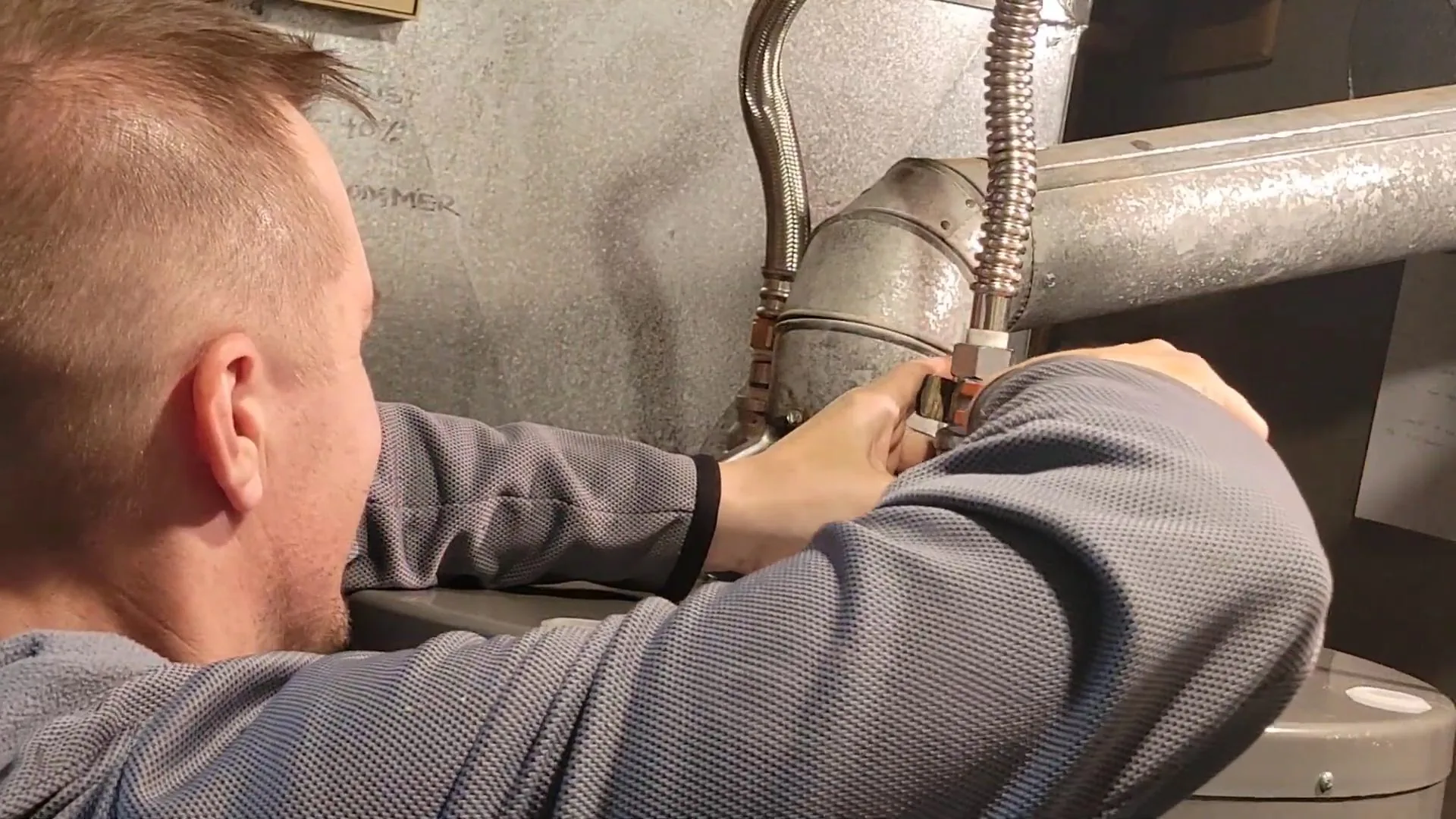
Is the tank actually leaking, or is something else wet?
Water around a heater is not always a failed tank. A dripping pipe fitting, condensation on a cold supply line and a discharge pipe that has opened to relieve pressure all leave a puddle that looks the same. Which one you have decides whether this is an urgent call or a repair that can wait for tomorrow.
Look at where the water is coming from before you touch anything.
| Where the water appears | Likely source | What to do |
|---|---|---|
| Steady flow from the bottom of the tank or the jacket | The tank itself has failed | Shut off the cold supply, turn off the power or gas, and call now |
| Drips at the pipes on top | A loose or corroded fitting | Usually a repair. Close the cold supply if it is more than a drip |
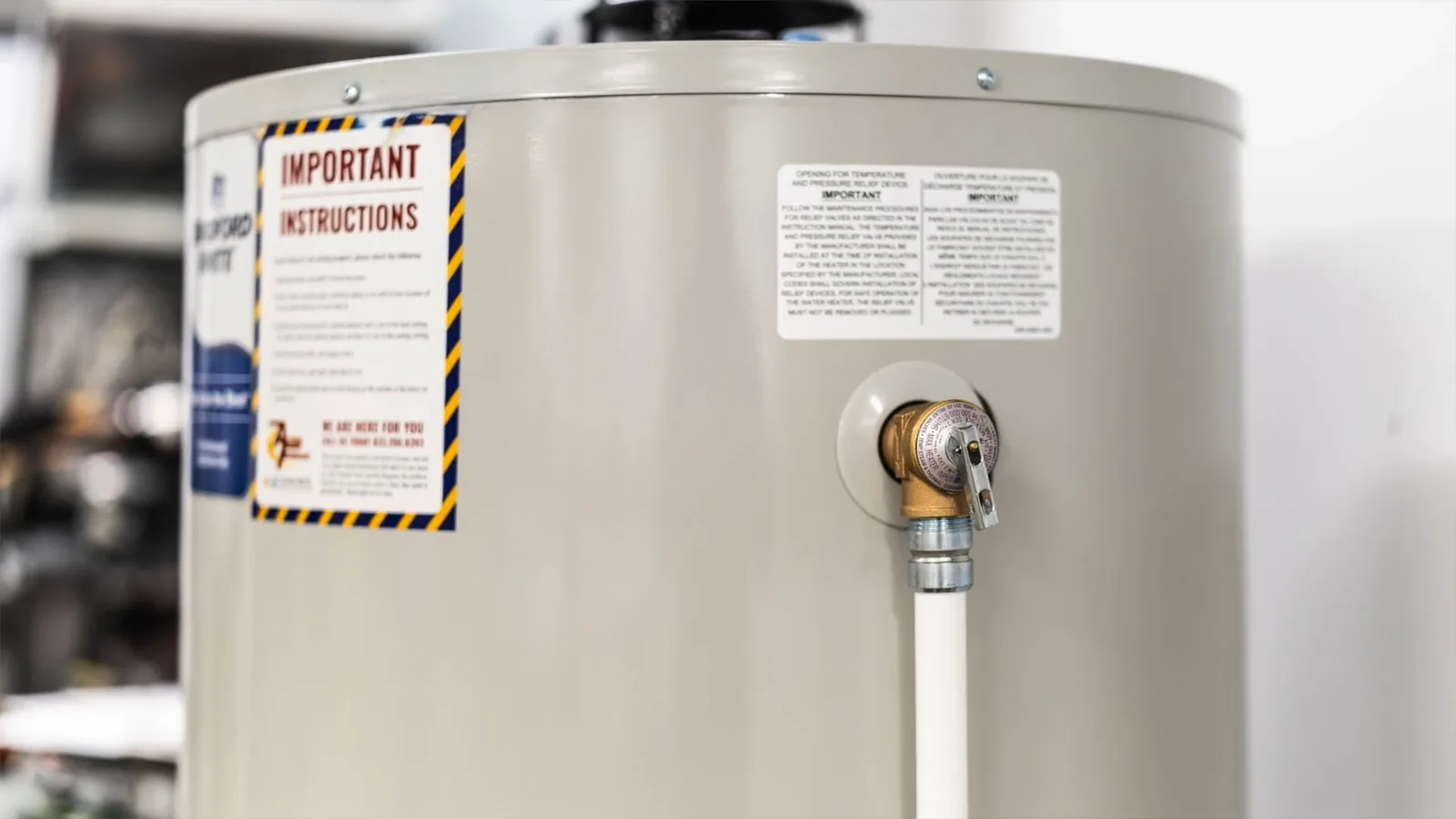
| Water running from the pipe beside the valve on the side | The temperature and pressure relief valve is discharging | Do not cap it. Call, because it is opening for a reason |
| Dampness on cold pipes in humid weather | Condensation | Wipe it dry. If it returns without a drip, it is not a leak |
| A small puddle that appears only after a hot shower | Expansion pushing water out of a valve | Worth a plumber's look at the expansion setup |
If water is actively pouring from the tank, the cold supply valve above the heater is the first thing to close. After that, switch off the breaker for an electric unit or set a gas unit's control to off. A tank leak is rarely repairable, and the realistic next step is replacing a failed tank.
No hot water or only lukewarm: what can you check first?
Most no-hot-water calls come down to a short list of causes, and two checks are safe for a homeowner. Neither involves opening the unit.
- Electric heaterCheck the breaker for the heater in your panel. If it is tripped, reset it once. If it trips again, stop and call, because a repeat trip means something has shorted.
- Gas heaterLook at the pilot light or the display on the control. If your model has a relight procedure on its label, follow the label exactly. If you smell gas at any point, leave the house and call your gas utility or 911 from outside.
- Either typeCheck whether other fixtures run hot. If only one tap is cold, the heater is probably fine and the fixture or its mixing valve is the problem.
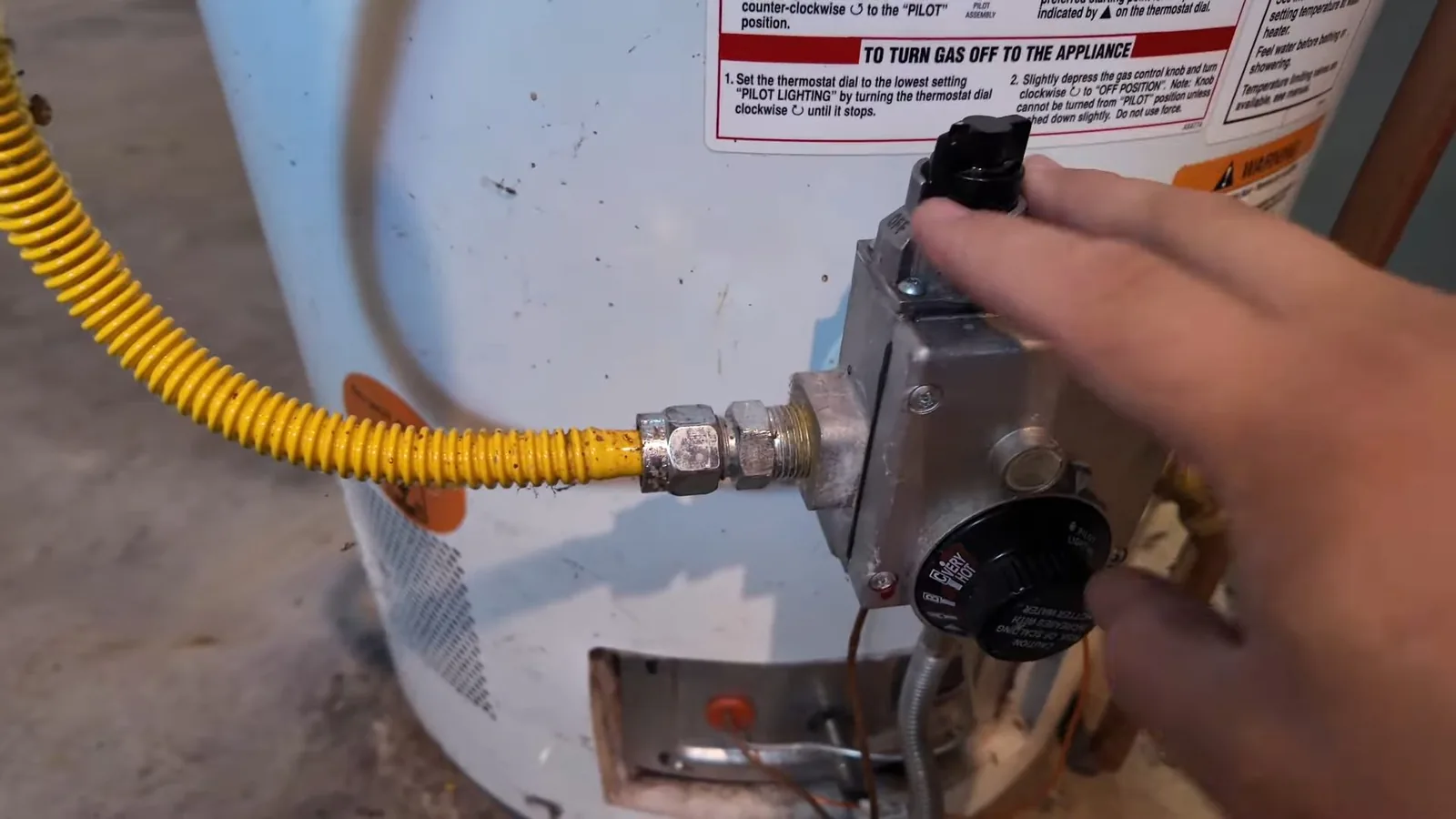
What these checks cannot tell you is why the heat stopped. On an electric unit a failed heating element or thermostat is the common cause, and a plumber can test both. On a gas unit it is often a thermocouple, a dirty burner or a gas control. Lukewarm water, as opposed to none, usually means one of two elements has failed, or the tank is full of sediment and cannot transfer heat well.
A hot water complaint can also sit at a fixture. A shower valve that has worn out looks like a heater problem. When you call, say which taps are cold and which are not, and that detail alone often tells the plumber where to start.
If one fixture is the odd one out, ask for the heater and that fixture to be checked in the same visit. A worn mixing cartridge, a failed shower valve or a crossed supply line can mimic a failing heater, and a single trip that covers both costs less than two separate calls. Our page on fixture repair covers the faucet side.
Repair the heater or replace it: how old is too old?
This is the decision most callers are really making, and age is the first input. Find the manufacturer's date on the rating label, or look up the serial number on the maker's site. Many tank heaters are built to last roughly 8 to 12 years, and very hard water tends to push them toward the short end.
Leander's water is very hard, with a reported 194 ppm. Scale and sediment collect at the bottom of the tank, which means a heater in a house without a softener often works harder than its label suggests. If your home has no softener, treat a heater past about ten years as one that may be near the end.
| Your situation | The usual answer |
|---|---|
| Under about eight years old, one failed part | Repair |
| Tank is leaking from the body | Replace |
| Over about ten years old and repairs are repeating | Replace, and consider a softener first |
| Rumbling or popping as it heats | Sediment. A flush may help if the tank is sound |
| Rust-colored hot water only | Tank corrosion is likely. Have the anode rod and tank checked |
Ask the plumber to tell you which part failed, whether the tank itself is sound and what the repair is expected to buy you. A fair quote names the part and says how long it should hold. If a repair costs a large share of a new unit on an old tank, replacement is usually the sounder spend. For ranges, see the plumbing cost guide.
Standing water by the heater right now?
Close the cold supply valve above the tank, turn off the power or gas, then call. Tell the person who answers what you can see, and they will route a plumber to your address.
Call (833) 571-0120What should you ask the plumber to check and write down?
A repair visit is a good moment to learn the condition of the whole unit. Ask for each of these to be checked and noted on the invoice.
- The anode rod. This sacrificial rod protects the tank from corrosion. In hard water it wears faster, and replacing it can extend the life of a tank that is otherwise sound.
- Sediment in the tank. A flush clears loose sediment. It will not remove scale that has hardened, and an old tank sometimes springs a leak after a flush, so ask what the plumber sees before agreeing.
- The relief valve and its discharge pipe. The valve must be present, the pipe must run to a safe point, and neither should be capped or plugged.
- Venting and combustion on a gas unit. Ask whether the flue draws correctly and whether there is any sign of back-drafting.
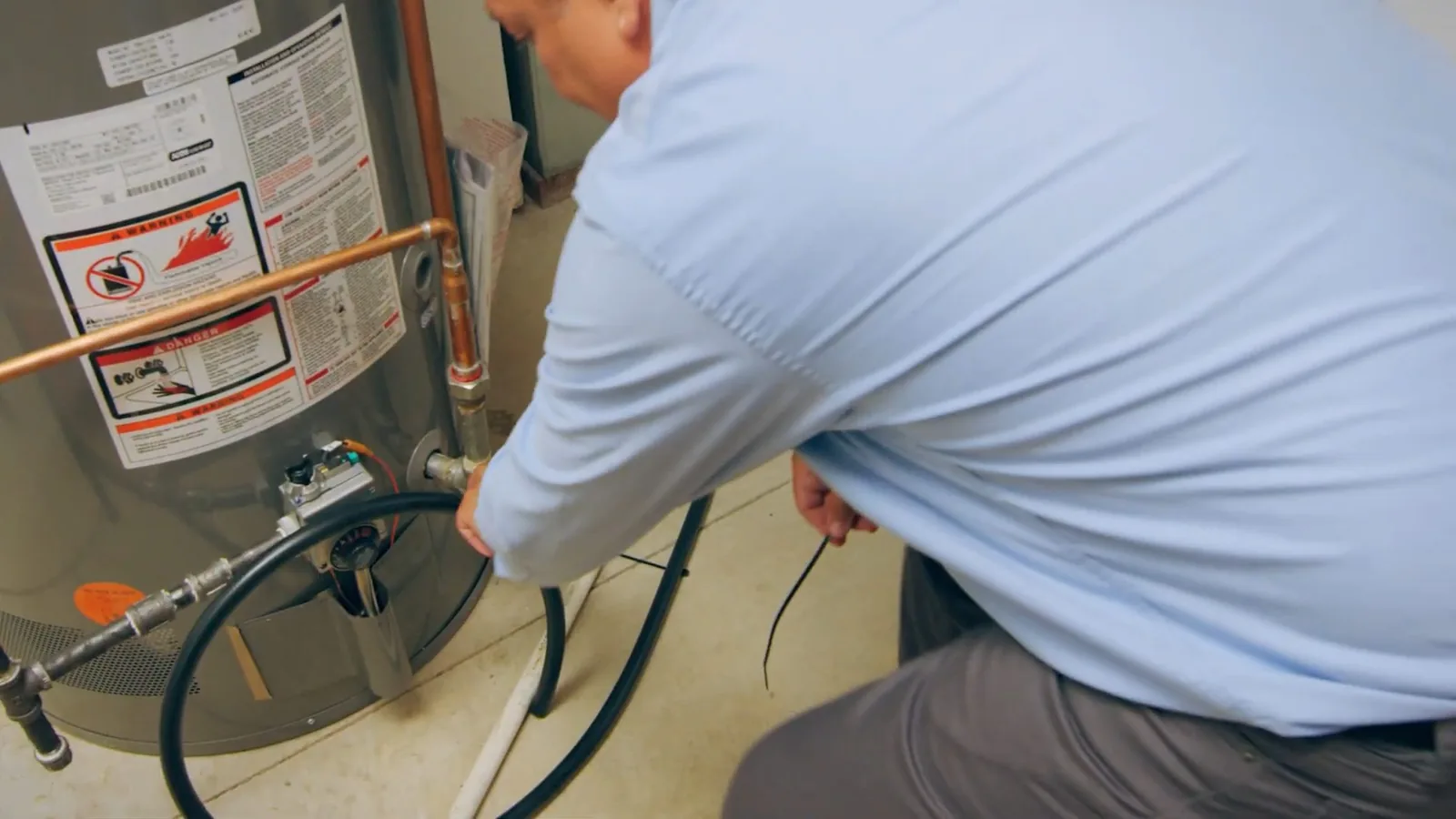
Write down the model, the serial number and the date of service. It is the record you will want when a warranty question comes up.
Permit, license and gas: who owns which part of a heater repair?
Some heater problems are not a plumber's to solve, and a few need paperwork. Knowing the split saves a wasted visit.
- A gas smell goes to the gas utility or 911 first.In Leander the gas utility is typically Atmos Energy, which you can confirm from your bill. A plumber comes after the gas is made safe.
- Panel and wiring problems belong to an electrician.A plumber can replace an element. A tripping breaker or a damaged circuit is wiring work.
- Permits.The City of Leander lists water heaters among the activities that need a permit. Its permit page does not say whether a part swap such as an element or thermostat is treated like a replacement, so ask the plumber who pulls the permit, or call Development Services at 512-528-2733. Inside the extraterritorial jurisdiction, the city applies only water and wastewater connection permits, so also ask whether your address is in the city limits.
- License.Texas requires plumbing work to be done by a licensed plumber or under one's supervision. Look up any license on the Texas State Board of Plumbing Examiners site. Plumbers are independent, and license details are available on request before work begins.
If the repair turns into a new unit, our page on installing a new tank heater explains the sizing and permit questions. If you are weighing a change of type, see tankless water heater service first, because very hard water affects those units differently.
Sources: City of Leander permits page; 2024 Consumer Confidence Report; Texas Occupations Code 1301.351.
Say whether the tank is wet or the water is just cold
Say whether the tank is wet or the water is just cold. You will be routed to a plumber serving your address.
Call (833) 571-0120