
Whole-house repiping in Leander, TX
Leander Repiping: Repeated Leaks or Low Pressure, Is It Time to Replace the Pipes?
One leak is a repair, and a pattern is a question about the pipes. This page helps you count the evidence, choose between a section, a branch, a reroute or the whole house, and know what a repiping quote and the job itself should include. Repiping Leander TX homeowners consider is rarely urgent after one leak, but a pattern of leaks changes that.
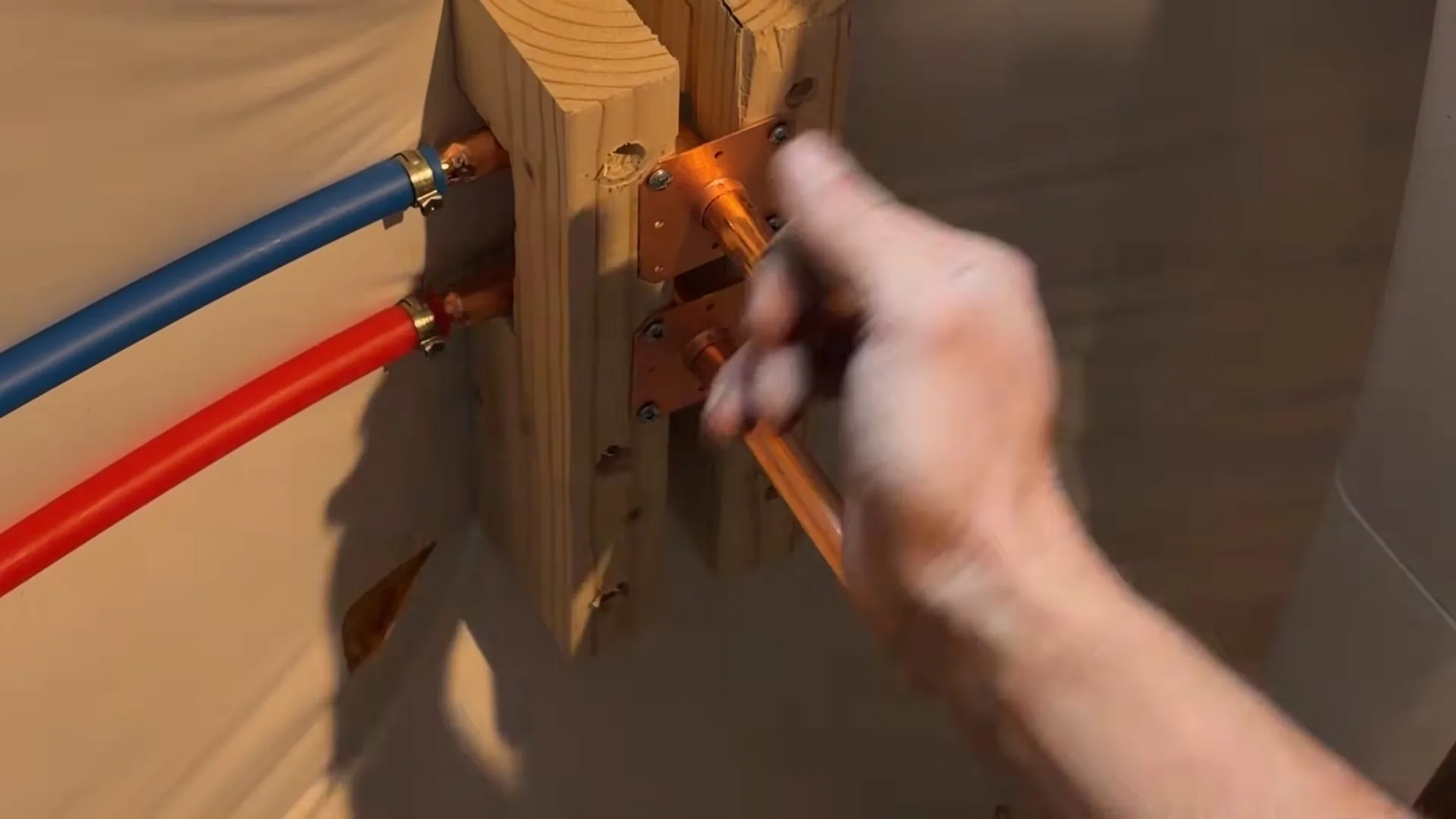
Repeated leaks or low pressure: is it time to price a repipe?
One leak is a repair. A pattern is a question about the pipes themselves. The signs below separate the cases that point to replacement from the ones that do not, so you know what to say when you call.
| What you notice | What it can mean | Does it point to repiping? |
|---|---|---|
| A second or third leak in a different spot within a year | The pipe wall is weakening along the run, not at one joint | Strong |
| Pinholes or green crust at several fittings | Corrosion in more than one place | Strong, ask what is causing it |
| Low pressure at every tap, not just one | A restriction in the pipes, a failing pressure regulator or a problem on the city side | Weak until the pressure is tested |
| Brown or rust-colored water from several taps | Corroding pipe, or sediment stirred up from the heater | Moderate, ask for an inspection first |
| One leak at one fitting | A failed joint or a worn valve | Weak, repair it |
Pressure is easy to test. A gauge that screws onto an outdoor hose bib shows the pressure at the house. If the reading is low there, ask Public Works at 512-259-2640 whether the cause is on the city side before you spend anything on the pipes inside.
Repair the leak or replace the pipes: how do you decide?
The choice is not about the age of the house. We have no verified source on what pipe material Leander homes were built with, so do not assume one. It is about what the pipes have been doing and what each repair costs in walls, time and water shutoffs.
- Count the repairsWrite down each leak with the date and the room. Three entries in two years tell a plumber more than any guess about the pipe.
- Ask what caused each oneA freeze, a pressure spike, a bad fitting and a worn pipe are different problems. Only the last one points to replacement. For help finding a source, see pinpointing where the leak is.
- Price the wall openingsEach repair means cutting drywall, patching and painting. Several small repairs can add up to the work of one larger one.
- Ask for a recommendation in writingA plumber who recommends replacement should say which pipes, why and what repairing instead would risk.
Replace nothing on a single leak. Replace only when the evidence says the next leak is a matter of time. A plumber who pushes a repipe after one fitting failure has not earned your trust, and one who patches the fifth leak without a word about replacement has not either.
Leaks that keep coming back?
Tell us how many leaks and where they showed up. You will be routed to a plumber who looks at repiping in your part of Leander.
Call (833) 571-0120Whole house, one run or a reroute: which scope fits?
Repiping does not always mean every pipe. The scope should follow the problem, and a quote should say which option it prices.
| Scope | What it involves | Best when |
|---|---|---|
| Replace one section | Cut out the bad run and join new pipe | The trouble is in one accessible run |
| Replace one branch | Redo the line to a bathroom, a kitchen or the water heater | Leaks cluster on one branch |
| Reroute through walls or attic | Abandon a line you cannot reach and run a new one | The old line is under the floor, as in slab leaks and rerouting |
| Whole house | New supply lines to every fixture | Leaks and corrosion are spread across the house |
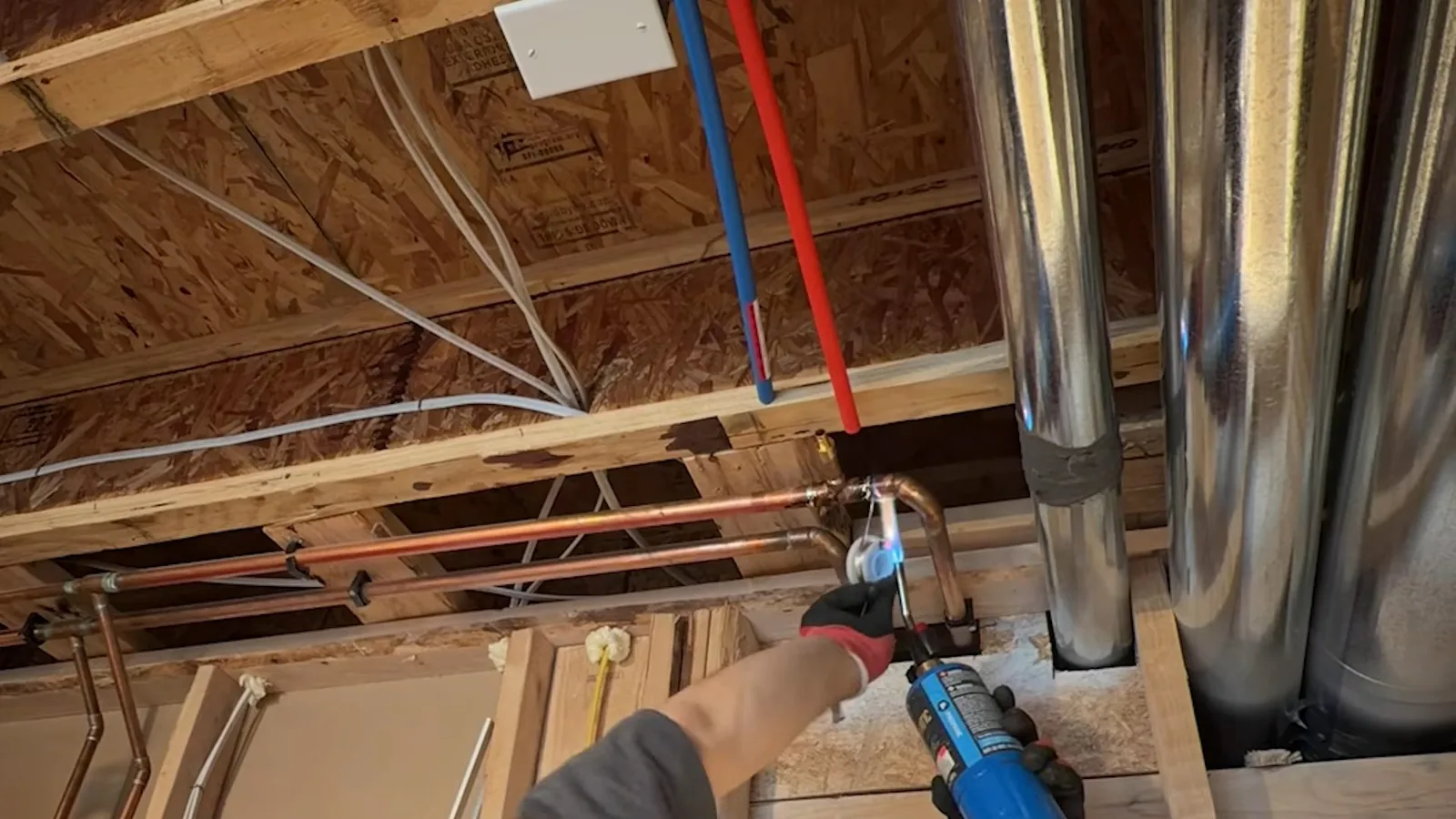
Ask whether the drain and vent pipes are part of the job. Repiping usually means the water supply lines. Drain lines are a separate scope, and a quote that does not say which one it covers cannot be compared with another.
Which pipe material should you ask about?
PEX, copper and CPVC are common choices for supply lines. We are not recommending one, because the right answer depends on the house, the access and the plumber's experience. What you can do is ask the questions that expose a weak plan.
- Which material, and why for this house?A good answer mentions access, the existing fittings and how the pipe handles the water, not just price.
- How are the connections made?Ask what fittings are used and where they will be located. Joints inside walls are the hardest to reach later.
- What is the warranty, and who stands behind it?Get it in writing, with the name of the company that issues it.
- Are the pipes protected where they pass through framing?Pipes rubbing a stud or a nail plate wear through. Ask how the plumber prevents it.
Ask the plumber to write the material and size on the quote. If you later sell the house, a buyer or an inspector will ask.
What does a repipe involve from start to finish?
A repipe is a construction job in an occupied house, so it helps to know the order of work. The sequence below is typical, and your plumber may do it differently.
- Walk the house. The plumber traces the existing lines, finds access in attics, closets and under floors, and marks where walls must open.
- Shut off the water. The main is closed for the stretch when lines are cut over, and your household is without water during that time. Ask how long.
- Open the walls. Small sections of drywall come out where access is needed, and new pipe is routed to each fixture.
- Connect and test. New lines are tied to the fixtures and the water heater, then pressure tested before any wall is closed.
- Close up. Ask whether the quote includes drywall patching, texture and paint. These are often separate trades.
Do not let anyone close a wall before the pressure test is done. A leak found afterward means opening it again.
How do you prepare the house for a repipe?
A little preparation shortens the job and protects what you own. None of it is complicated.
- Clear the access pointsEmpty the closets, the cabinets under sinks and the space around the water heater so the plumber can reach the pipes.
- Plan for the water being offFill containers, line up where family members can wash and decide what to do about pets and plants.
- Cover or move furniture and floorsDust from drywall travels. Ask whether the crew lays protection down.
- Photograph before you startTake pictures of walls, floors and ceilings so any damage is clear afterward.
If a wall is opened and you find water damage inside, our page on drying out after pipe damage describes removal and drying.
What should a repiping quote spell out before you sign?
Quotes for this job vary in what they include, and the lowest number is often the one that leaves something out. Compare the contents, not just the total. For ranges across common jobs, see typical plumbing price ranges.
- Which pipes and which fixturesList every fixture the new lines will feed, including the water heater, the washer and the outdoor taps.
- Material, size and fittingsNamed on the quote, not described as "standard".
- Wall repairWhether patching, texture and paint are included, and who does them.
- PermitWho pulls it, and whether the cost is in the total.
- Water-off time and scheduleHow many days, and when the water is off.
- Change ordersWhat happens to the price if the plumber finds something unexpected behind a wall.
Get at least two quotes if the job is large. Read both against this list and ask each plumber to explain any difference. For common questions, see plumbing questions answered.
Does very hard water change the plan?
The City of Leander's 2024 water report lists hardness at 194 ppm, which is very hard. We cannot say hard water caused a leak in your pipes, and no source we found links the two for Leander homes. What the number does change is what you should ask for while the walls are open.
- Ask about softener plumbing nowA bypass valve and a spot for the unit are much easier to add while the pipes are exposed than later. See softener sizing for very hard water.
- Ask about the water heater connectionsScale collects in heaters and fixtures. Fresh, accessible shutoffs and flexible connections make later service easier. If a new heater is also due, see water heater installation.
- Do not skip the pressure checkA pressure-reducing valve protects the new lines. Ask whether yours works.
Permit, registration and license for a repipe
Texas requires plumbing work to be done by a licensed plumber or under one's supervision, and you can check a license on the Texas State Board of Plumbing Examiners site. The City of Leander says replacing fixtures without altering plumbing needs no permit. A repipe alters the plumbing, so ask the plumber whether a permit is required and who pulls it. The city also says contractors must register, and its Development Services office is at 512-528-2733. The city lists the 2021 ICC codes as adopted, so ask which edition the plumber builds to.
If the new line crosses the yard, such as a service line from the meter, Texas811 asks for notice at least two business days before digging. This page describes household repiping. If the building is commercial, say so on the call.
Sources: City of Leander permits page; 2024 Consumer Confidence Report; Texas811; Texas Occupations Code 1301.351. Material choices and job sequence are general practice, not a diagnosis of your home.
Describe the leaks and the pressure problem
Say how many leaks and where. You will be routed to a plumber who looks at repiping in your area.
Call (833) 571-0120