
Garbage disposals in Leander, TX
Leander Garbage Disposal Installation: Repair a Jam or Leak, or Replace the Unit?
A disposal that hums and will not turn, or drips into the cabinet, usually points to one of a few causes. This page helps you tell a jam from a failing motor, find where a leak starts and decide between a repair and a new unit, with the install steps people tend to miss. For garbage disposal installation Leander TX households often find the swap is simple when the type matches.
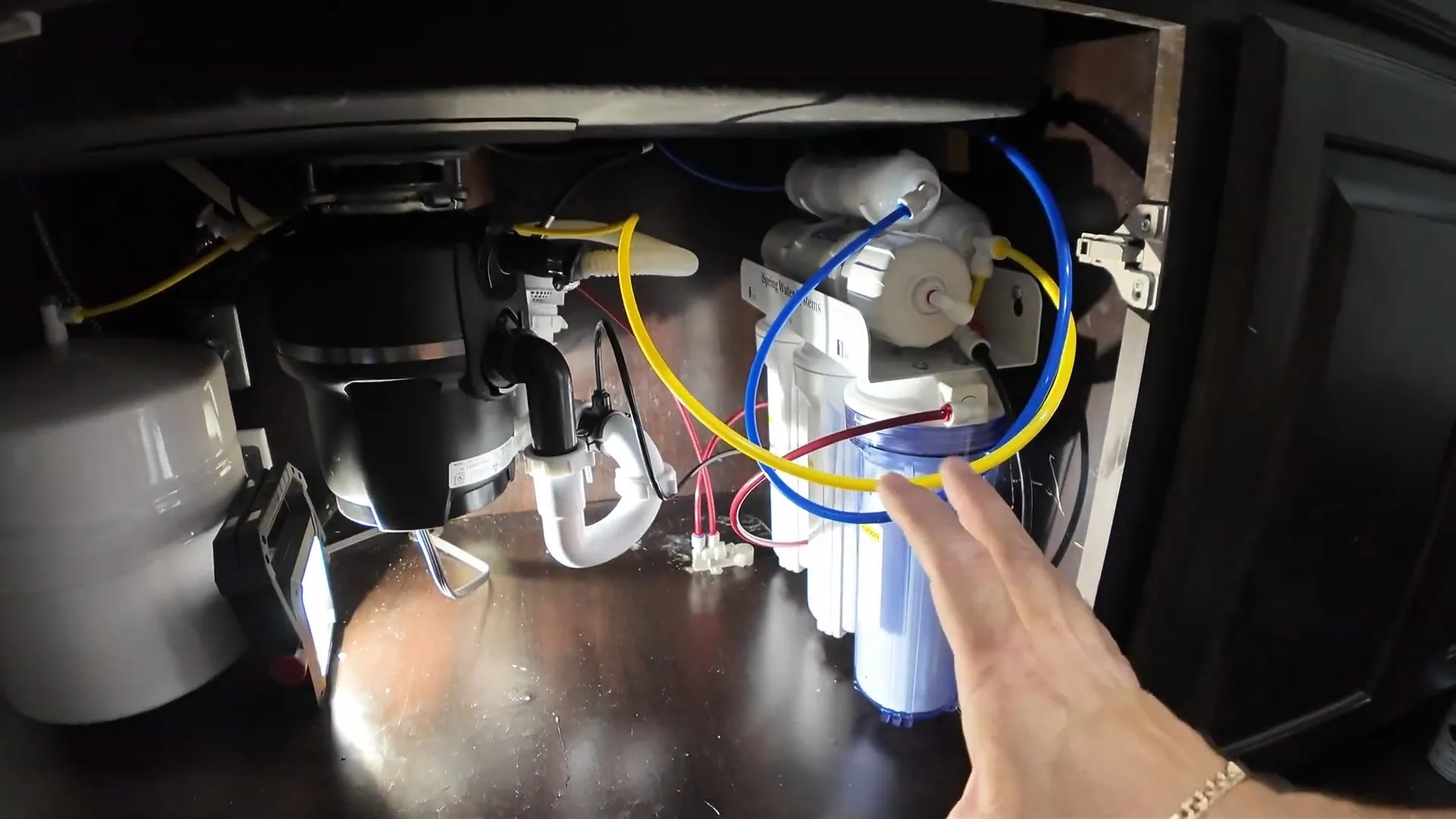
Is the disposal jammed, humming or leaking?
A disposal fails in three recognizable ways, and each has a different next step. Naming the symptom before you call saves a visit, because a jam is often fixed in minutes while a leaking housing means a new unit.
| What it does | Likely cause | What to try first |
|---|---|---|
| Hums but the blades do not turn | Something is jammed against the blades | Power off, then release the blades from below with the hex key slot |
| Does nothing, no hum | Tripped reset button or a power problem | Press the red reset button on the bottom, then check the breaker |
| Runs but drains slowly | A clog in the trap or branch line | Not a disposal fault, see clearing a clogged kitchen drain |
| Water drips from the unit | A loose flange, a hose or a cracked housing | Find where it drips from, as below |
| Smells even when empty | Food residue in the grind chamber or the baffle | Clean the baffle and flush with cold water |
Never put a hand in a disposal, even when it is off. Turn the power off at the switch and the breaker before you do anything that involves the blades, and use a tool, not your fingers.
Where is the leak coming from, and does it mean a new disposal?
The location of the drip decides the answer. Dry the cabinet, run water and a little grinding, and watch where the first drop forms.
- At the top, where the disposal meets the sinkThe mounting flange or its seal has loosened. This is usually a repair.
- At the side, where the dishwasher hose attachesA loose clamp or a cracked hose. A small repair.
- At the drain pipe where it leaves the unitA loose connection or a worn gasket. Usually a repair.
- From the bottom or the body of the unitThe housing has cracked or the inner seal has failed. This is the sign to replace the disposal.
A disposal that leaks from the body cannot be patched. If the unit is also several years old, replacing it usually makes more sense than repairing a connection on a failing motor.
A disposal that will not run or will not stop leaking?
Say what it does and where it drips. You will be routed to a plumber who repairs and installs disposals in your area.
Call (833) 571-0120Repair the disposal or replace it?
Most disposals are built to last a decade or so, depending on use. A repair makes sense on a younger unit with a single failed part. It rarely makes sense on an old unit with a worn motor.
| Situation | Usual answer |
|---|---|
| Jam cleared, unit runs normally | No repair needed |
| Loose flange or hose, unit otherwise sound | Repair the connection |
| Motor hums or trips the reset repeatedly | Replace, if the unit is several years old |
| Leak from the body of the unit | Replace |
| Rust staining or a noisy, grinding sound | Replace soon |
Ask the plumber what failed and whether the rest of the unit is worth keeping. For ranges, see the costs of common plumbing repairs.
What does a new disposal install involve?
Swapping one disposal for another of the same type is straightforward. A first-time install or a change in type adds steps.
- Power. Most units plug into an outlet under the sink or are hardwired to a switch. A first-time install may need a new outlet and switch from an electrician.
- The dishwasher connection. If a dishwasher drains through the disposal, the plastic knockout plug inside the unit's inlet has to be removed. Leaving it in is the classic reason a dishwasher stops draining after a new install.
- The mount and the drain. The unit hangs from the sink flange, and its outlet joins the trap. The plumber should check the slope and the seal.
- The test. Run water and grind a little ice or food waste, then check each joint for a drip.
Ask which horsepower suits your household and whether the sink flange is in good shape. A worn flange is easier to replace while the unit is out than afterward. If you are replacing the sink as well, our page on sink and faucet installation covers that side.
What should and should not go down the disposal?
Many repeat jams trace back to the same few habits. A short list prevents most of them.
- Keep outGrease and oil, coffee grounds in quantity, pasta and rice that swell, fibrous peels, bones and produce stickers.
- Run cold waterCold water keeps fats solid so the blades can chop them. Run it for several seconds after grinding.
- Do not use chemical drain cleanersThey can damage seals and the housing, and they are hazardous for whoever works on the unit next.
The City of Leander's 2024 water report lists hardness at 194 ppm, which is very hard. Mineral deposits can narrow the trap and the pipe below the disposal over time, so a kitchen line that slows often may need cleaning as well as a new unit.
Do you need a permit, and who should do the work?
The City of Leander says replacing fixtures without altering plumbing needs no permit. Installing a disposal where there was none, or changing the drain, goes beyond a like-for-like swap, so ask the plumber whether the job needs one.
Texas requires plumbing work to be done by a licensed plumber or under one's supervision. You can look up a license on the Texas State Board of Plumbing Examiners site. Plumbers are independent, and license details are available on request before work begins.
Wiring is a separate trade. A new outlet or switch is an electrician's job. For the questions people ask most, see the plumbing questions Leander homeowners ask.
Sources: City of Leander permits page; 2024 Consumer Confidence Report; Texas Occupations Code 1301.351. Disposal lifespan and install steps are general guidance.
Describe what the disposal is doing
Say whether it hums, jams or drips. You will be routed to a plumber who handles disposals in your area.
Call (833) 571-0120