
Water damage restoration in Leander, TX
Leander Water Damage Restoration: What to Do in the First Day After a Leak or Burst Pipe
After a leak or burst pipe, the first day decides how much has to be torn out. This page covers what to do before anyone arrives, which materials are usually dried or removed, how drying is measured and where removal and drying end and rebuilding begins. Water damage restoration Leander homeowners need begins within the first day, so the first call matters.
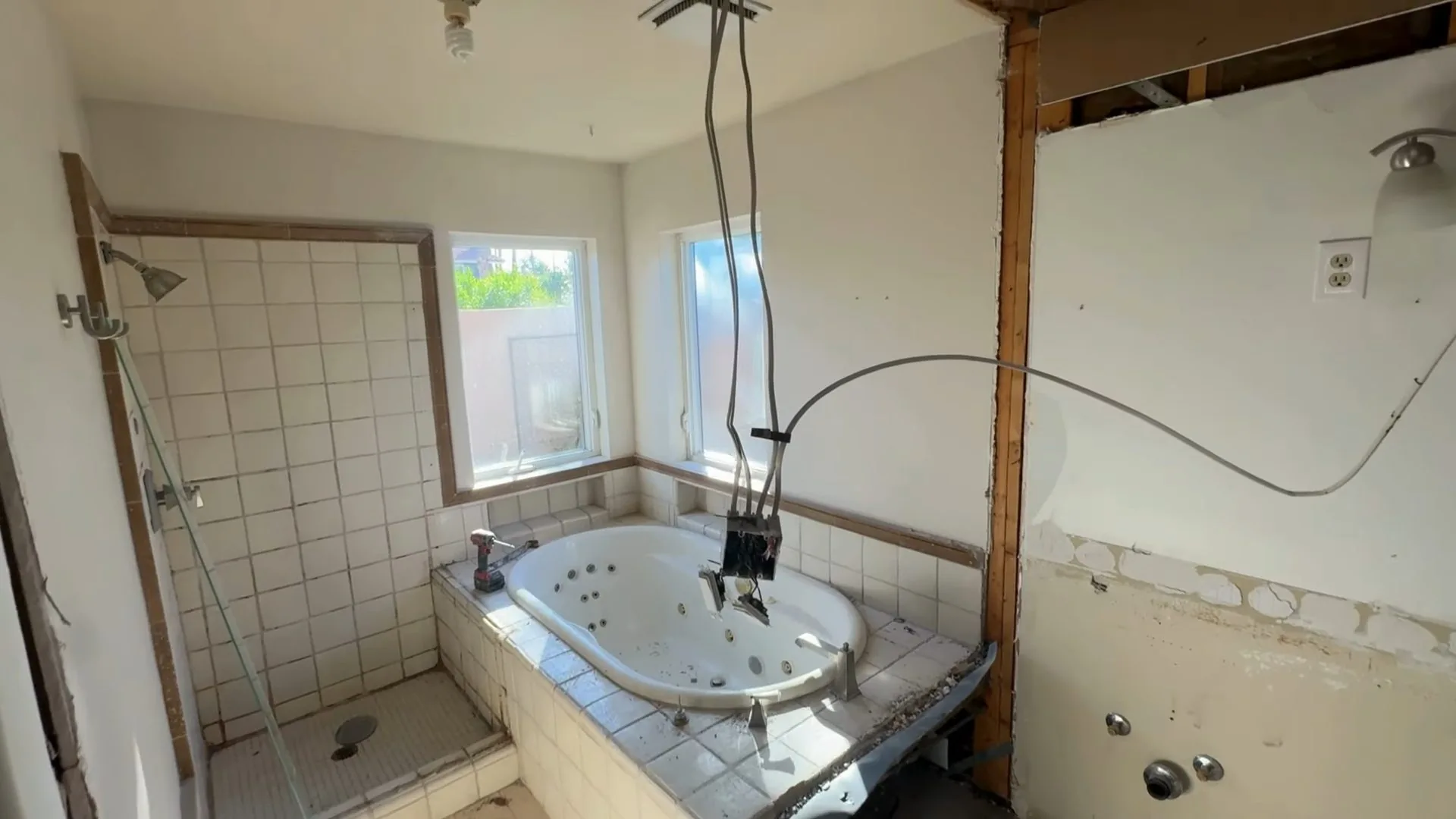
Wet floors and walls: what should happen in the first few hours?
Water does the most harm in the first day, and what you do before anyone arrives matters. The steps below are in the order that limits the spread. They are general guidance for clean water from a plumbing leak.
- Stop the source. Close the main shutoff, or the valve for the fixture that is leaking. If you cannot, see stopping a burst pipe first.
- Stay out of wet rooms near electricity. If water reached outlets, a panel or light fixtures, keep clear. Turn off a breaker only if you can reach it from dry ground.
- Photograph everything. Take wide and close shots of the water, the damage and the source before you move anything.
- Lift what you can. Move furniture, rugs and small items off wet floors. Do not pull up carpet or cut walls yet.
- Call. Say where the water came from, which rooms are wet and whether it is still running.
The EPA's mold guidance says to dry wet or damp materials within 24 to 48 hours to prevent mold growth. That window is the reason to call early rather than wait to see how bad it gets.
Where did the water come from, and does it change who you call?
The source decides what is safe to touch, what a technician can do and whether a plumber has to come first.
| Source | What to do | Who handles it |
|---|---|---|
| A supply line, faucet or fixture leak | Shut the water off and photograph | A plumber stops the leak, then drying starts |
| A leaking water heater | Close the cold supply and turn off power or gas to it | See a leaking water heater |
| A hidden leak in a wall or floor | Shut the main and note the meter | See tracing the source of a hidden leak |
| A sewage backup or sewage in a drain or tub | Do not touch the water. Stop using fixtures | See sewage backup and the sewer line. Tell us on the call |
| Rain, roof leaks or water from outside | Photograph and call your insurer | A roofer or another specialist. Say so on the call |
Sewage water carries contamination that clean water does not. Do not wade through it, and keep children and pets out. This page describes removal and drying after clean-water plumbing leaks, so tell the person who answers if the water might not be clean.
Water on the floor right now?
Say where it came from, which rooms are wet and whether the water is off. You will be routed to someone who handles water removal and drying in your area.
Call (888) 681-3447Which wet materials can be dried, and which come out?
Not everything that gets wet can be saved. A technician decides on site with moisture readings, but knowing the usual outcomes helps you set expectations and avoid tearing out what could be dried.
| Material | Often dried in place | Often removed |
|---|---|---|
| Carpet | Sometimes, if the water was clean and it is caught early | The pad underneath, in many cases |
| Drywall | Lightly wet walls, with air flow and dehumidifying | Sections that stayed soaked or are crumbling |
| Insulation | Rarely, once soaked | Usually, if it is wet through |
| Hardwood and laminate | Sometimes, with drying mats | Boards that cup, swell or separate |
| Tile and concrete | Usually, the surface dries | Rarely, unless the subfloor beneath is wet |
| Cabinets | Solid wood with a short wetting | Particleboard that swells |
Ask the technician to show the moisture reading before removing anything, and to explain why a material is coming out. A reading is a better reason than a hunch.
How does drying work, and how do you know it is finished?
Drying is a process with measurable steps. A visit that ends with fans running and no readings gives you nothing to check.
- ExtractionStanding water is removed first with pumps or wet vacuums. Fans cannot do that job.
- Air moversFans push air across wet surfaces to move moisture out of the materials.
- DehumidifiersThey pull moisture out of the air so it does not settle back into walls and floors. Ask where the equipment will sit and who powers it.
- Moisture readingsA meter shows how wet the materials are. Ask for the first reading, a reading at each check and a final reading that matches a dry reference spot.
Drying is finished when the materials read dry against a reference, not when the room feels dry. Ask for the final readings in writing for your insurer. Equipment is loud and uses power, so ask how many days to expect and what the visit schedule is.
Already seeing mold? What to do and who to call
Mold can start in wet materials within a day or two, which is why timing matters. Removal and drying are meant to prevent it, but they are not mold testing or mold remediation, and this page does not describe either.
- If you see or smell mold alreadySay so on the call. Do not scrub or disturb it with a dry brush.
- Mold work is licensed separatelyThe Texas Department of Licensing and Regulation licenses mold assessors and remediators. Check the rules for your situation before hiring anyone.
- Reconstruction is a different jobReplacing drywall, flooring, paint and cabinets is rebuilding. We do not describe or price it here.
Plan on two stages: drying first, then repairs once the readings are clean. Ask the technician to say in writing when it is safe to rebuild.
Insurance, records and what to keep
A water loss usually becomes an insurance claim, and the claim is only as strong as the records behind it. Policies differ, so read yours and call your insurer early.
- Photos and videoCapture the damage before and after anything is moved, including the source of the water.
- The plumber's written descriptionIt should say what failed, where and why, and what was repaired.
- Moisture readings and equipment logsThe first, middle and final readings, and the dates equipment ran.
- A list of what was lostItems you throw away, with photos taken first.
- Every invoice and receiptIncluding emergency repairs you paid for before approval.
Ask your insurer what they need before you authorize work, and what they expect in writing from the company doing the drying. For ranges, see what plumbing jobs usually cost.
Where this water damage service applies
This service covers ZIP codes 78641 and 78645. If your address is somewhere else in Leander or nearby, say your ZIP code when you call so the person who answers can tell you if it applies. The number on this page is the one to use for water damage.
This page describes household water damage from plumbing leaks. If the building is commercial, say so on the call, because we do not describe commercial water damage here. Fixing the pipe itself is plumbing work, and Texas requires it to be done by a licensed plumber or under one's supervision. You can check a license on the Texas State Board of Plumbing Examiners site. For the questions people ask most, see water and plumbing questions answered.
Sources: EPA, A Brief Guide to Mold, Moisture, and Your Home; TDLR mold licensing; Texas Occupations Code 1301.351. Drying steps and material outcomes are general practice, not a diagnosis of your home.
Water in the house? Call now
Say where the water came from and which rooms are wet. You will be routed to someone who handles water removal and drying in your area.
Call (888) 681-3447