
Leak detection in Leander, TX
Leander Leak Detection: Finding the Leak Behind a High Water Bill or a Stained Wall
A water bill that jumped, a stain that keeps growing or a meter that moves when nothing is running all point to water going where it should not. This page shows how to confirm a leak with your meter, how to read the signs by source and what to ask before anyone opens a wall. Leak detection Leander homeowners can start themselves takes one tool, the water meter.
Is there a leak at all? Start at your water meter
A high water bill is the most common reason people suspect a leak, and it is also easy to misread. A bill can rise because of a leak, a stuck toilet flapper, a watering schedule or a house full of guests. The meter settles the question without anyone touching a wall.
- Turn off every water use. Close taps, stop the dishwasher and washer, and turn off the irrigation system if you have one.
- Read the meter. Note the dial or the digits, and look for the small leak indicator, often a triangle or a dial that spins.
- Wait 15 to 30 minutes with nothing running, then read it again.
- Compare. If the number moved or the indicator spins, water is going somewhere. If it did not move, the leak, if any, is intermittent.
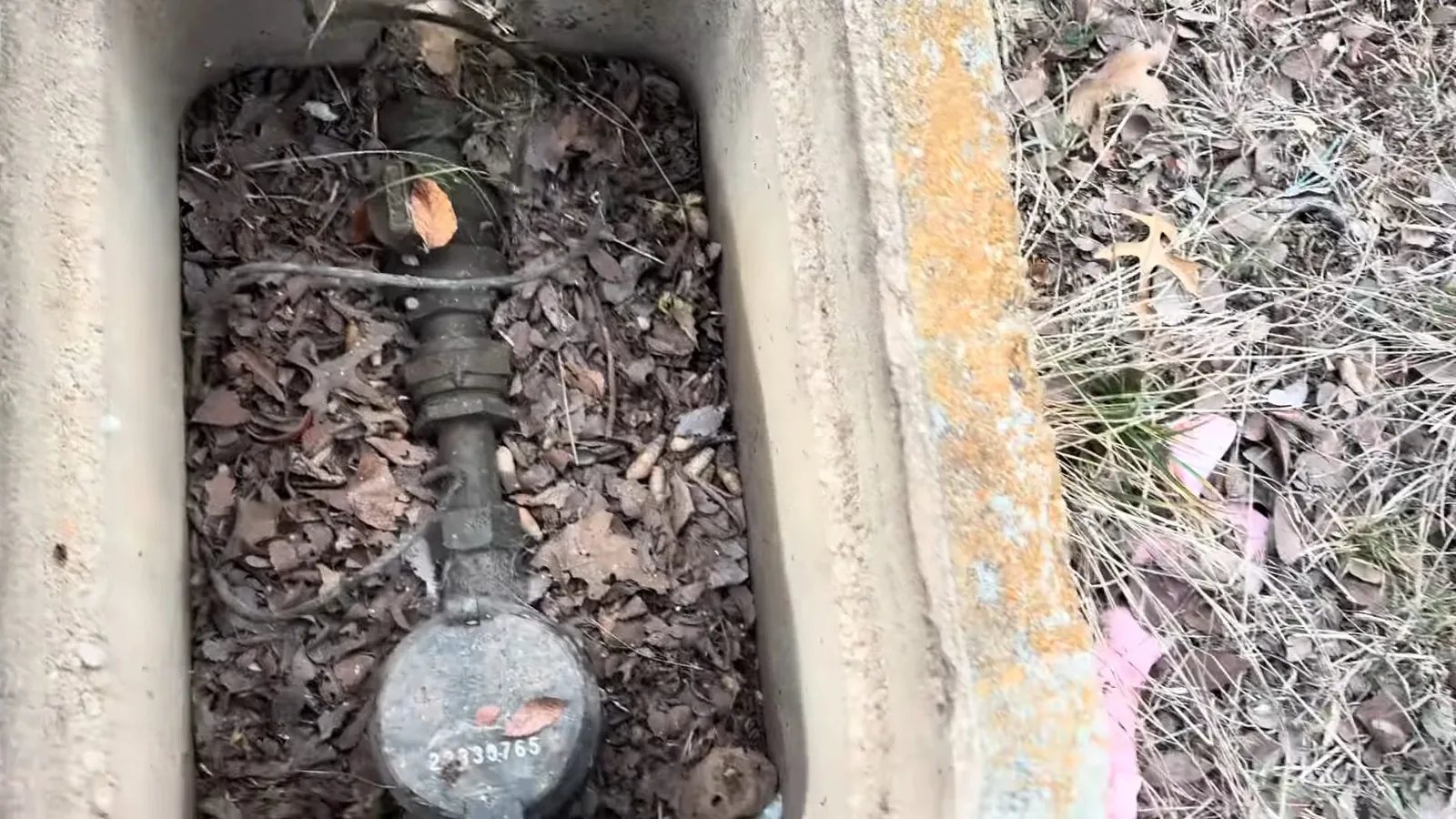
What this check cannot tell you is where the water is going. A moving meter with the house quiet tells you there is a leak between the meter and the fixtures. It could be a toilet, the irrigation line, a pipe in the wall, a line under the slab or the line from the meter to the house. A plumber's job starts where this test stops.
Where is the leak likely hiding? Read the signs by source
Different leaks leave different clues. Match what you see to the likely source, and tell the plumber the pattern when you call.
| What you notice | Likely source | Next step |
|---|---|---|
| A warm spot on a floor, or the sound of running water with everything off | A hot line under the slab | See slab leak detection and repair |
| A stain or bubbling paint on a wall or ceiling | A supply or drain line inside the wall, or a roof leak | Check whether it grows when it has not rained |
| A soft or unusually green patch in the yard | The line between the meter and the house | Find the shutoff and call |
| Hissing near the meter or a wet meter box | The meter connection or the service line | Call Public Works first if it is on the city's side |
| Low pressure that came on suddenly | A leak that is taking pressure with it | Run the meter test |
| Sprinkler zones that stay wet | A leaking irrigation valve or line | Shut the irrigation valve and re-test the meter |
The line from the street to the house is where ownership gets blurry. The City of Leander's Public Works number is 512-259-2640, and the city's pages we found do not say where its responsibility ends and yours begins. Ask them, and tell the plumber what they said.
The meter moves and you cannot see why?
Tell us what you found at the meter and where the signs show up. The person who answers will route a plumber who finds hidden leaks in your part of Leander.
Call (833) 571-0120Which leak detection method should you ask for?
Finding a leak without opening walls depends on the right tool for the pipe. A plumber should be able to say why they chose one and what it will show.
- Acoustic listeningSensitive microphones pick up the sound of water escaping from a pressurized line. It works best on pressurized supply lines and is harder on very slow leaks.
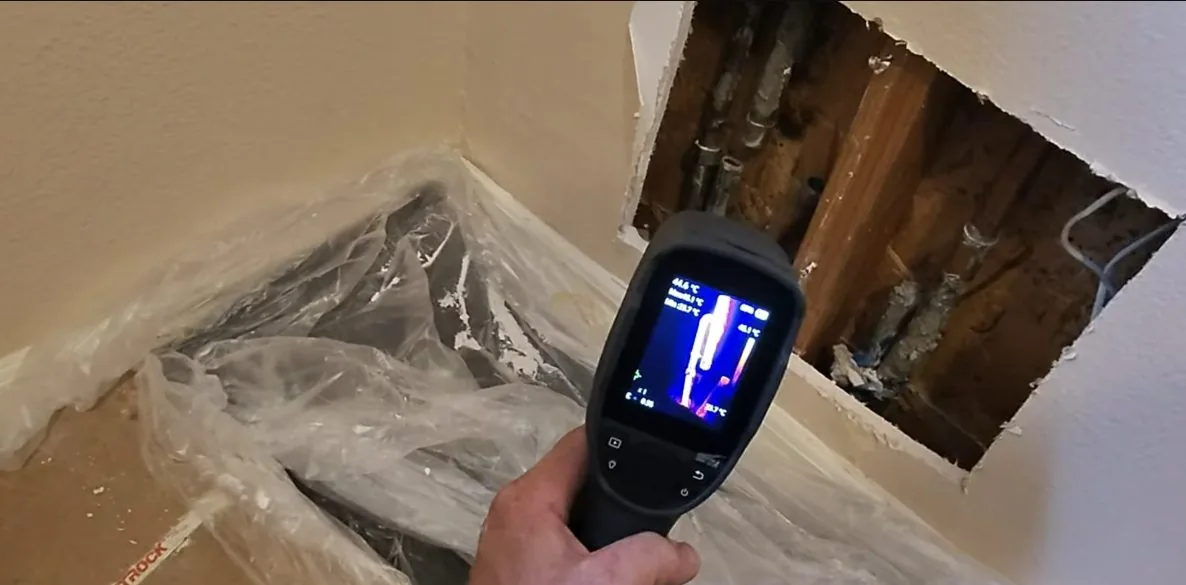
- Thermal imagingA thermal camera shows temperature differences, which makes warm hot-water leaks visible under a floor. It points to a likely area, but it does not prove a leak by itself.
- Electronic and tracer gas testingA harmless gas is added to an isolated line and a detector finds where it escapes. This is useful when the sound is faint or the pipe is plastic.
- Pressure testingThe plumber isolates sections of pipe and watches the gauge. This tells you which line is losing pressure.
Ask which method found the leak and how far it is from a reference point, such as a wall or a fixture. A written note with a measurement and a photo lets the next person find the same spot. If the plumber cannot say where the leak is within a small area, the next step should be more testing, not a hole.
What should be documented before anyone opens a wall or a floor?
Opening a wall or breaking a slab is the expensive part of a leak repair. A few questions before the first cut save money and arguments later.
- Where exactly is the leak? Ask for the location on a sketch or photo, with the measurement.
- How big is the opening? The plumber should say how much drywall, tile or flooring will be cut and who patches it.
- What moisture readings were taken? A moisture meter reading before and after gives you a record for your insurer.
- Is the pipe material identified? Whether the leak is a pinhole, a joint or a fitting changes the repair.
If the leak has already soaked drywall, flooring or insulation, drying matters as much as the repair. Our page on water damage removal and drying covers what happens after the pipe is fixed.
Pinhole leaks in copper: patch one or replace the run?
A pinhole leak is a tiny hole in a pipe wall, often in copper, that sprays a fine jet or just keeps a spot damp. One pinhole is a repair. Several pinholes in the same house are a signal about the pipe.
We do not have a verified source for what pipe material Leander homes were built with, so do not assume. Ask the plumber to identify yours at the first visit.
| Situation | Usual answer |
|---|---|
| One pinhole in an accessible section | Replace that section |
| Second pinhole within a year, in a different spot | Ask what is causing it before repairing again |
| Several leaks across the house | Price repiping the whole house against repeated repairs |
Repeated repairs add up, and each one costs a wall opening. For ranges, see the guide to plumbing costs in Leander.
Gas, roof, pool or the city: who owns which kind of leak?
Not every leak is a plumber's. A wrong first call costs a day, and with gas it costs more.
- A gas smell goes to the gas utility or 911 first.Leave the building and call from outside. In Leander the gas utility is typically Atmos Energy, which you can confirm from your bill. Our page on gas line repair covers the plumbing side once the gas is safe.
- A roof or gutter leak belongs to a roofer.A stain below the roof line that grows only after rain is not a plumbing leak.
- Pool and spa leaks belong to a pool specialist.We do not describe pool leak testing on this page.
- Below-grade rooms.We have no verified information on basements or crawl spaces in Leander homes. If yours has one, say so on the call.
- Commercial buildings.This page describes household service only.
- Digging.If finding or fixing the leak means digging, Texas811 asks for notice at least two business days before the dig.
Texas requires plumbing work to be done by a licensed plumber or under one's supervision. You can check a license on the Texas State Board of Plumbing Examiners site. For the questions people ask most, see the answers to common plumbing questions.
Sources: Texas811; City of Leander Consumer Confidence Report (Public Works number); Texas Occupations Code 1301.351. The city's pages did not state who owns the line from the meter to the house, so this page does not either.
Describe what the meter does and where signs show up
Say what the meter does and where the signs show up. You will be routed to a plumber serving your address.
Call (833) 571-0120