
Hydro jetting in Leander, TX
Leander Hydro Jetting: When a Cable Is Not Enough and When Jetting Is Too Much
A drain that clears after a cable visit and slows again within weeks is telling you the buildup is still on the pipe wall. Jetting scours it away, but it is not right for every line. This page helps you decide when to ask for it and what a careful plumber checks first. Hydro jetting services Leander TX plumbers offer should always start with a camera look at the line.
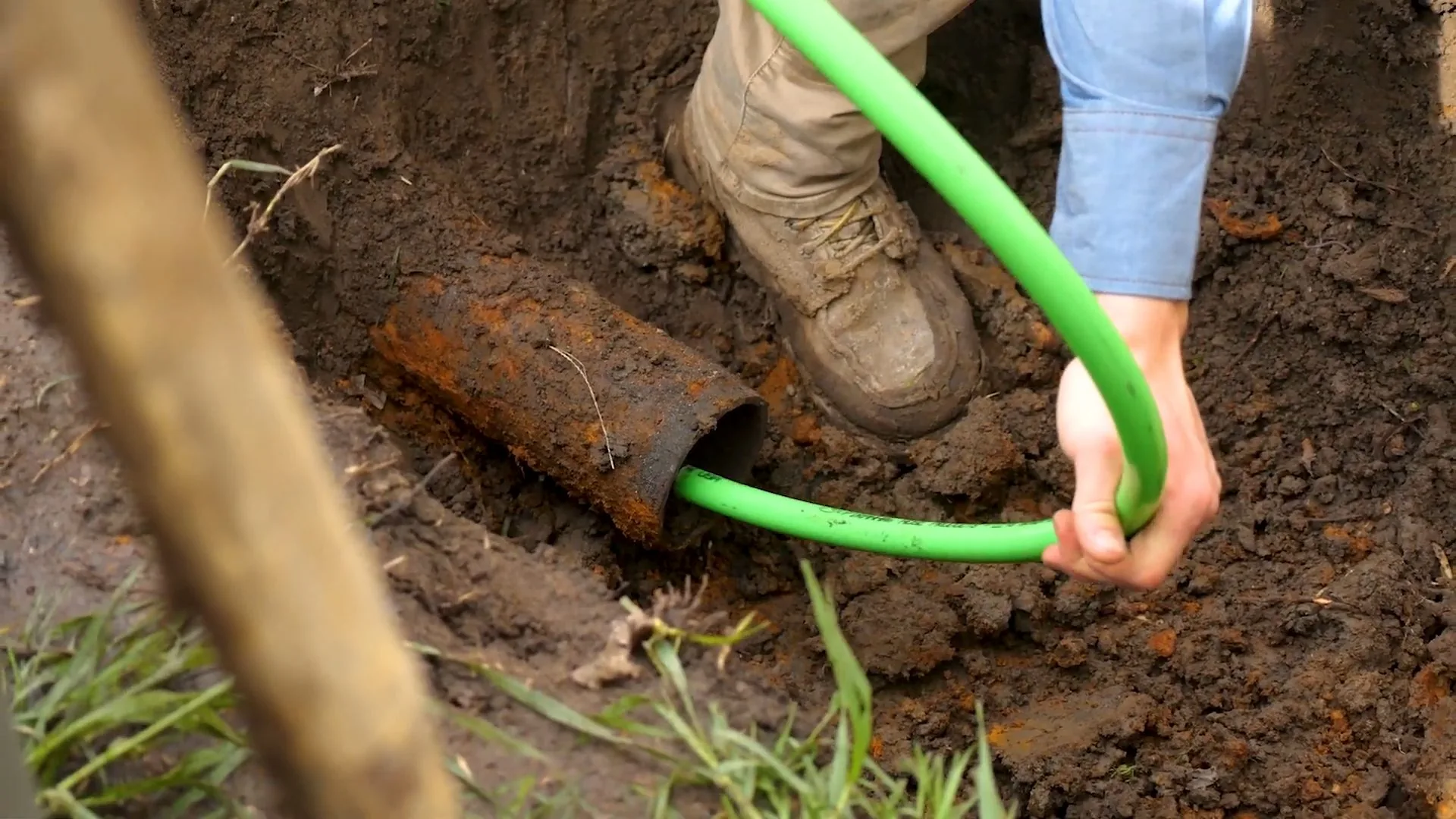
When is a cable not enough for your drain?
A cable punches a hole through a clog and leaves the buildup on the pipe wall. If the same drain keeps slowing down after a cable visit, the clog was never the whole problem. The pipe has been narrowing, and the next bit of grease or hair catches on what is left.
Hydro jetting uses high-pressure water to scour the inside of the pipe. It cuts through grease, scale and roots and flushes them toward the main line, which a cable cannot do.
| Situation | Cable | Jetting |
|---|---|---|
| A single fresh clog in a sink | Usually enough | More than needed |
| The same drain slows every few weeks | Gives temporary relief | Often the better answer |
| Heavy grease in a kitchen line | Leaves a coating | Strips the wall |
| Fine roots at a joint | Cuts them back briefly | Clears more, roots may return |
| A cracked or collapsed pipe | May snag | Not suited, see below |
Our page on drain cleaning and clog removal covers the earlier steps, including what is safe to try before you call.
When is jetting too much for the pipe?
High-pressure water is not right for every line. A pipe with cracks, offsets or a collapsed section can be damaged by it, and water forced into a break can wash soil out around the pipe.
That is why a camera belongs before the jet. A plumber should look at the line first and say whether it can take jetting.
- Camera firstThe footage shows cracks, bellies, offsets and root intrusion, and whether jetting is safe.
- The right nozzle and pressure for the pipeAsk what nozzle and pressure the plumber plans to use for your pipe material and size.
- Camera again afterA second look confirms the pipe is clear and shows whether the jet found damage.
If the camera shows a broken or collapsed section, jetting only delays the repair. That is the point to look at repairing or replacing the sewer line.
A drain that keeps slowing after every cable visit?
Tell us which drain and how often it slows. You will be routed to a plumber who handles jetting and camera work in your area.
Call (833) 571-0120What should you ask before a jetting visit?
A few questions at the start separate a careful job from a rushed one.
- Where will the plumber access the line? A cleanout is the usual entry. If there is none, ask how they will get in and whether one should be installed.
- What will the camera show, and will you see it? Ask for the footage or a written description with distances.
- What happens to the debris? It should be flushed to the main line, and the plumber should confirm the main is flowing freely afterward.
- What if damage is found? Ask what the plumber will do and whether the visit has a fixed scope.
Kitchen line, bathroom branch or main: where does jetting help most?
Jetting is not one job. What it does for a kitchen line is different from what it does for a main, and so is what can go wrong.
| Line | What builds up | What jetting does | Caution |
|---|---|---|---|
| Kitchen drain | Grease and food residue | Strips the coating from the wall | Habit decides how long it lasts |
| Bathroom branch | Hair, soap and mineral film | Clears the film a cable leaves | Usually a short line, often a cable is enough |
| Main line | Grease, scale and roots | Opens the full bore of the pipe | Camera first, the line may be damaged |
| A line with a belly | Waste collects in the low spot | Clears it temporarily | The belly stays, so the clog returns |
If your question is whether to jet a line that has already been repaired or lined, ask the plumber who did the repair. Some liners and repairs have limits on the pressure they can take.
Will the buildup come back in very hard water?
The City of Leander's 2024 water report lists hardness at 194 ppm, which is very hard. Mineral deposits can add to buildup inside drain lines over time, along with grease and soap. We have no way to say how much of a given line's buildup is mineral, because that is something the camera shows.
- Jetting resets the pipeIt removes the buildup that is there. It does not stop new buildup from forming.
- Habits decide how long it lastsGrease down the kitchen drain is the most common reason a jetted line fills again.
- A softener helps the water sideSee treating hard water in Leander for how it works.
Ask the plumber for a rough interval to re-check the line, based on what the camera showed, rather than a fixed schedule from a brochure.
Street line, permits and licensing before a jetting visit
If every drain in the house backs up and the cleanout is full of water, the clog may be in the street line. The City of Leander's Public Works number is 512-259-2640. Ask Public Works where your responsibility for the line ends. If the work means digging, Texas811 asks for notice at least two business days before.
The City of Leander says replacing fixtures without altering plumbing needs no permit. Installing a cleanout or changing drain lines is different, so ask the plumber whether a permit applies. Texas requires plumbing work to be done by a licensed plumber or under one's supervision, and you can check a license on the Texas State Board of Plumbing Examiners site.
This page describes household service only. Commercial kitchens and restaurant grease lines have their own requirements, so say so on the call if that is your need. For ranges, see the guide to plumbing costs in Leander.
Sources: City of Leander permits page; 2024 Consumer Confidence Report; Texas811. No pressure figures are given because the right setting depends on the pipe.
A drain that keeps slowing? Describe it
Tell us which drain and how often it slows. You will be routed to a plumber who handles jetting in your area.
Call (833) 571-0120